


🦺 Your Anxious Brain Isn't Trying to Torture You—It's Actually Trying to Protect You
It's 2:00 a.m. You're exhausted. You want to sleep.
Then suddenly, your anxious brain decides it's the perfect time to replay that conversation from earlier today.
"Did I sound rude?"
"Why did I say that?"
"I should have responded differently."
"What if they think I'm incompetent?"
If this sounds familiar, you're not alone. Many people experience late-night mental replays, especially when they're feeling stressed or anxious.
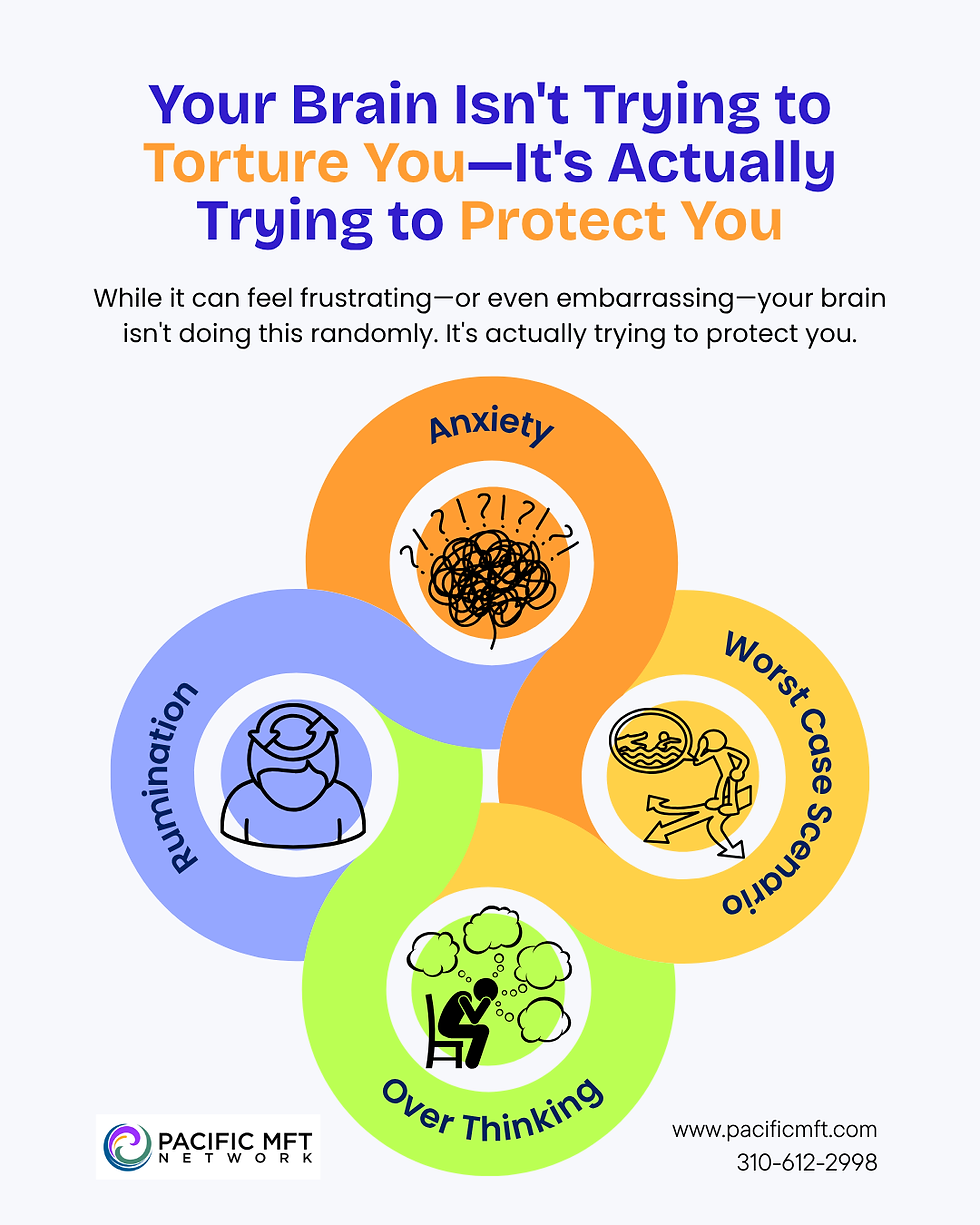
Why Does Your Anxious Brain Replay Conversations?
From an evolutionary perspective, humans are wired to pay close attention to social interactions. Thousands of years ago, being accepted by your community was essential for survival. Rejection could have serious consequences.
Your brain still carries that ancient programming today.
When a conversation feels uncertain, emotionally charged, or unresolved, your brain may interpret it as unfinished business. It keeps reviewing the interaction, hoping to identify mistakes, predict future outcomes, or prevent similar situations from happening again.
Unfortunately, instead of finding solutions, many people get stuck in a cycle of rumination.
Rumination vs. Reflection
Healthy reflection helps us learn from experiences.
Rumination is different.
Reflection asks:
What can I learn from this?
Rumination asks:
What if I embarrassed myself?
Why did I say that?
What if they never talk to me again?
What if everyone noticed?
Reflection moves you forward.
Rumination keeps you trapped in the same mental loop.
Why It Happens at Night
Many people notice these thoughts become louder when they're trying to sleep.
During the day, your brain is occupied with work, family, errands, and conversations. At night, those distractions disappear.
Your brain finally has quiet—and often fills that silence with unfinished emotional business.
Fatigue also plays a role. When we're tired, the brain is less effective at regulating emotions, making worries feel much bigger than they really are.
Anxiety Wants Certainty
One of anxiety's biggest goals is certainty.
It wants reassurance that:
You didn't offend anyone.
You're safe.
People still like you.
Nothing bad is about to happen.
The problem?
Most conversations don't come with complete certainty.
Your anxious brain keeps replaying the interaction because it believes that if it analyzes it one more time, it will finally find the answer.
It rarely does.
How to Break the Mental Replay Cycle
1. Notice What's Happening
Instead of believing every anxious thought, simply name it.
"I'm replaying this conversation because my anxiety is looking for certainty."
Creating this small amount of distance reduces the power of the thought.
2. Ask Yourself One Helpful Question
Instead of asking:
"What if I messed everything up?"
Try asking:
"Do I have actual evidence something went wrong?"
Often, the answer is no.
3. Accept That You May Never Know
This can feel uncomfortable, but it's also freeing.
You may never know exactly what someone else thought about the conversation—and that's okay.
Learning to tolerate uncertainty is one of the most effective ways to reduce anxiety over time.
4. Practice Self-Compassion
Imagine a close friend told you they were worried about saying something awkward.
Would you criticize them?
Or would you remind them that everyone has imperfect conversations?
Offer yourself the same kindness.
5. Redirect Your Brain
When you notice yourself replaying the same interaction for the tenth time, gently shift your attention.
Try:
Deep breathing
Progressive muscle relaxation
Reading a few pages of a book
Listening to calming music
Focusing on what you can hear, feel, and see in the present moment
The goal isn't to force the thoughts away—it's to stop feeding them.
When It Happens Frequently
Occasional overthinking is normal.
But if replaying conversations keeps you awake, affects your relationships, or leaves you feeling anxious most days, it may be time to seek support.
Therapy can help you identify the underlying patterns driving rumination, build healthier coping strategies, and develop greater confidence in yourself and your relationships.
You don't have to spend every night arguing with your own thoughts.
With the right tools, you can learn to quiet the mental replay and finally get the rest—and peace of mind—you deserve.
You Don't Have to Overthink Alone
Anxiety doesn't have to control your life. Whether you're struggling with constant worry, overthinking, panic, or stress, the therapists at Pacific MFT Network are here to help. We offer compassionate, evidence-based therapy tailored to your unique needs, both in-person and virtually throughout California. Contact us today to find the right therapist and begin your journey toward greater confidence, resilience, and emotional well-being.
Find you just right therapist at, https://www.pacificmft.com/therapist-info/meet-our-team
#MentalHealth #Anxiety #Overthinking #Rumination #StressManagement #TherapyWorks #Mindfulness #SelfCompassion #MentalWellness #Psychology #PacificMFTNetwork


Comments