


🦋 Navigating Cultural Expectations as an LGBTQ+ Person
For many LGBTQ+ individuals, coming to terms with identity is only one part of the journey. Another deeply personal and often painful challenge can be navigating cultural, religious, or family expectations that may not align with who you are.
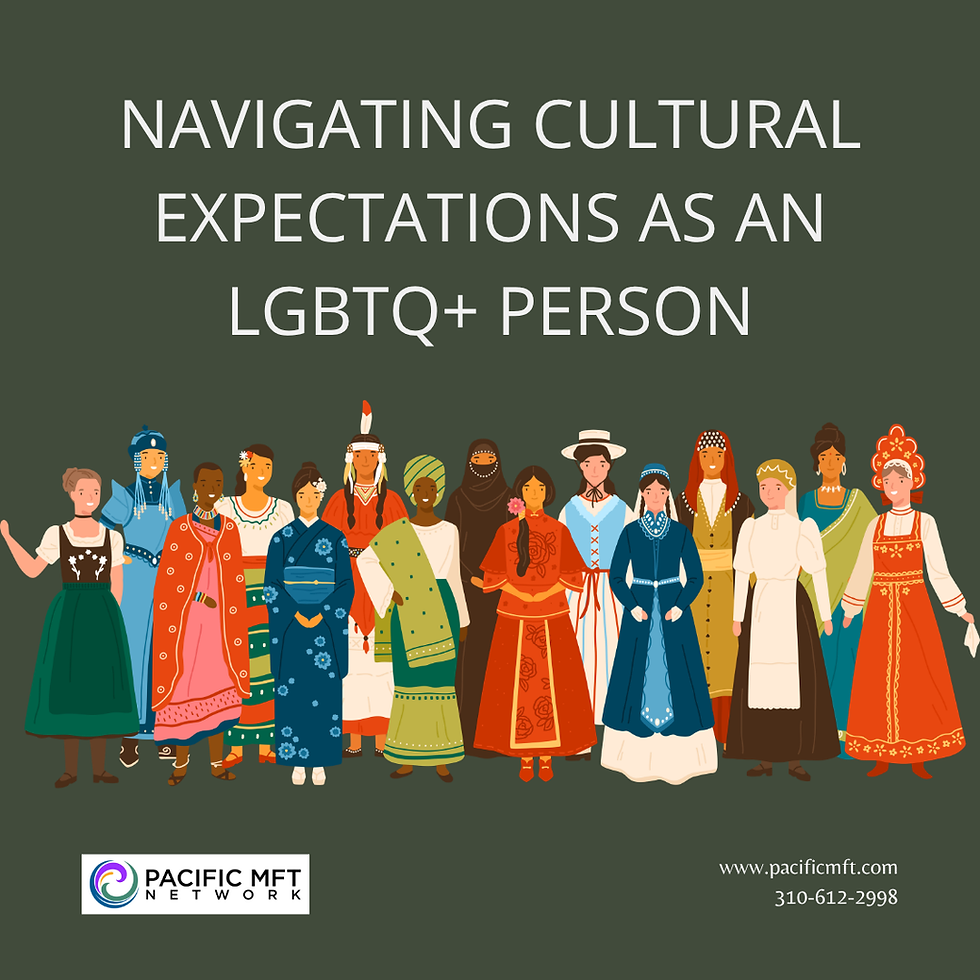
Culture can provide a sense of belonging, tradition, connection, and pride. Family values, religious beliefs, and community norms often shape how we see ourselves and the world around us. But when LGBTQ+ identity feels at odds with those expectations, it can create emotional conflict, isolation, guilt, fear, or pressure to hide parts of yourself in order to maintain connection and acceptance.
This experience is incredibly common—and incredibly complex.
The Pressure of Living Between Two Worlds, Being LGBTQ+ and your Culture
Many LGBTQ+ people grow up hearing messages about what is considered “acceptable,” “normal,” or expected within their culture or family system.
These expectations may include:
Traditional gender roles
Expectations around marriage or children
Religious beliefs about sexuality or gender
Pressure to prioritize family reputation or honor
Expectations to avoid discussing identity openly
Fear of disappointing parents or elders
For some people, this can lead to living what feels like a double life—being authentic in certain spaces while hiding parts of themselves in others.
This balancing act can be emotionally exhausting.
Common Emotional Experiences
Navigating cultural expectations as an LGBTQ+ person can bring up many emotions, including:
Guilt
You may feel guilty for wanting a life that differs from what your family envisioned for you.
Fear of Rejection
Many people fear losing emotional connection, financial support, or community acceptance if they come out or live openly.
Isolation
It can feel lonely when you don’t fully relate to either your cultural community or mainstream LGBTQ+ spaces.
Anxiety and Hypervigilance
Constantly monitoring what you say, how you act, or who knows about your identity can create chronic stress and anxiety.
Grief
Sometimes there is grief around not receiving the acceptance, understanding, or unconditional support you hoped for from loved ones.
These feelings are real and valid.
You Do Not Have to Choose Between Culture and Identity
One of the most painful beliefs many LGBTQ+ individuals carry is the idea that they must choose between their cultural identity and their authentic self.
But identity is not “either/or.”
You can honor your culture while also honoring yourself.
You can value family while recognizing unhealthy dynamics or harmful expectations.
You can love your community and still create boundaries that protect your mental health.
For many people, healing involves redefining what belonging looks like on their own terms.
Building a Supportive Community
Finding affirming support can make a huge difference.
This may include:
LGBTQ+ affirming friends or chosen family
Therapists who understand cultural and identity-related experiences
Support groups
Faith communities that affirm LGBTQ+ identities
Online communities where people share similar lived experiences
Feeling seen and understood can reduce shame and help people feel less alone.
Setting Boundaries with Compassion
Boundaries are often especially difficult in collectivist cultures or close family systems where loyalty and interconnectedness are deeply valued.
Setting boundaries does not mean you do not care about your family or culture.
Boundaries may look like:
Limiting conversations that feel harmful
Choosing what parts of your identity you share and when
Protecting your emotional wellbeing
Taking space from relationships that feel unsafe
Allowing yourself to prioritize mental health
Healthy boundaries help create emotional safety and self-respect.
Healing Takes Time
There is no “right” way to navigate identity, culture, family expectations, or coming out. Every person’s situation is different. Some people come out openly. Others move more slowly. Some maintain close family relationships, while others need distance to heal.
Your journey belongs to you.
You deserve spaces where you do not have to hide who you are.
You deserve relationships built on respect, care, and authenticity.
And you deserve support while navigating the complicated emotions that can arise when identity and cultural expectations intersect.
Therapy Can Help
Therapy can provide a safe and affirming space to process identity, family dynamics, cultural expectations, anxiety, grief, and relationship challenges. Working with an LGBTQ+ affirming therapist who understands multicultural experiences can help you build self-understanding, confidence, emotional resilience, and healthier boundaries.
At Pacific MFT Network, our diverse team of therapists provides affirming and culturally sensitive therapy for LGBTQ+ individuals, couples, and families throughout California. We are here to support you in creating a life where you can feel more connected, authentic, and emotionally supported.
#LGBTQ #LGBTQMentalHealth #Pride #CulturalIdentity #QueerHealing #LGBTQSupport #MentalHealthAwareness #TherapySupport #AffirmingTherapy #BIPOCMentalHealth #QueerCommunity #HealingJourney #SelfAcceptance #PacificMFT


Comments